

Some football managers find praise easy to come by. There are some like Pep Guardiola and Jose Mourinho whose achievements speak for themselves. They win trophies at an astonishing rate and change the face of modern football. There are others who might not win trophies but are praised for their coaching talent and the style that their teams play with. There are others that continue to get jobs no matter how many failures mount up in their careers.
Then there are other managers who never quite get the credit they deserve. Who win trophies, who punch above their weight, but never get the respect their achievements perhaps merit.
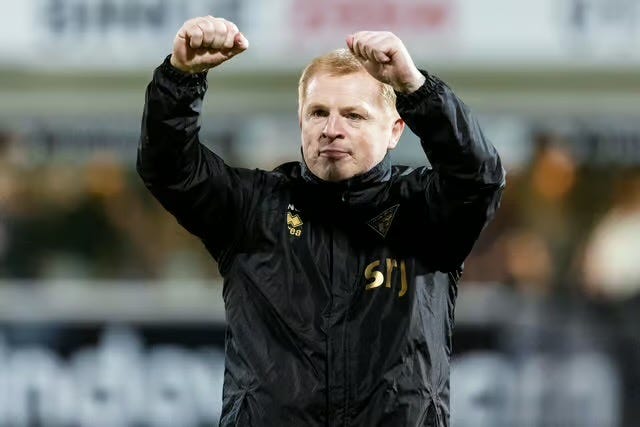
Neil Lennon is one of those managers.
I write this article the day after his Dunfermline Athletic side took a narrow 1-0 lead over Arbroath in the Scottish Championship play-offs.
The result leaves Lennon and his team still in with the chance of securing a remarkable double, with Lennon leading his second tier side to the Scottish Cup final where they will face off against his old club Celtic.
It has been a hugely surprising season, with so much success achieved against the odds. But perhaps we shouldn’t be so surprised. Perhaps it’s time that Lennon’s skill in management was finally recognised.
I have a theory why it isn’t. And it won’t be particularly surprising to anybody. Lennon has a reputation as a hothead. He was fiery as a player and he took that attitude into his management career. He’s not cool. He doesn’t wave his arms around like a matador like Mikel Arteta. He doesn’t play to the gallery. He snarls, he fights, he claws.
It would be fair to say that Lennon was thrown in at the deep end when he began his management career.
Taking over Celtic, who were struggling after a dismal spell under Tony Mowbray was no mean feat. Lennon scrapped (go and look at his touchline face to face with Ally McCoist to see what I mean) but was very successful in the process.
Trophies are expected at the famous Glasgow clubs but that expectation of success brings huge pressure.
Lennon won three league titles and two Scottish Cups in that first spell in charge which lasted just over four years.
He also achieved great success with another Scottish giant Hibernian. Lennon achieved promotion in his first season, winning the Scottish Championship with plenty to spare, leading them back to the top division after a three year absence. The following season they finished fourth in the league and qualified for the Europa League. He left the club after two and a half years after a fall out with some staff at the club.
Lennon, though, wasn’t to be long out of work. After Brendan Rodgers walked out on Celtic (the first time) the club needed someone who could step into his shoes quickly and they turned to a familiar face in Lennon, who had quickly rebuilt his reputation in Edinburgh after a disappointing 18 month spell at Bolton Wanderers.
More trophies followed. In those first couple of months Lennon and his side wrapped up another treble with the League title and Scottish Cup added to the League Cup that Rodgers had secured prior to his departure. He added a treble of his own the following season.
And then things began to unravel. Rangers, their closest rival, were finally a threat once more after two years of steady, if unspectacular progress, under Steven Gerrard. Celtic and Lennon in particular seemed to lose their heads in the face of their first real sustained challenge in years and they crumbled, Lennon eventually resigning in February as Rangers cantered to the title, completing an unbeaten season along the way.
After a second intense spell at Celtic nobody would have blamed Lennon for taking a backseat from the dugout and focusing on his media work. But Lennon is a manager who seems to need to be involved in day to day football. There was a short spell managing in Cyprus where he once again demonstrated his ability to deliver silverware winning the Cypriot Cup with Omonia. There was then a bizarre six game spell at Rapid Bucharest in which he drew five and lost once before being relieved of his duties.
And so on to his spell at Dunfermline Athletic and the chance to finish the season in glorious fashion. They face a tough test in their semi-final, facing off against a Patrick Thistle side who finished 15 points ahead of them in the league.
And then that date with destiny against Celtic.
Whatever eventually happens this season has served as a timely reminder that Neil Lennon is a very, very decent manager.